VPN Tunneling Explained 2026: A Complete Guide
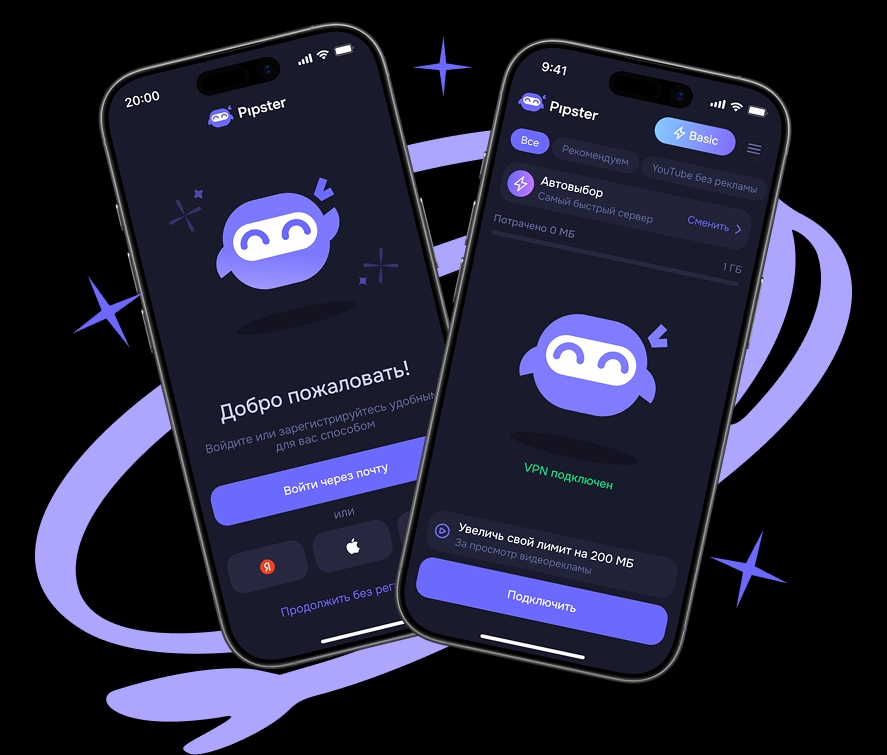
- Stable connection
- One-click activation
- Russian-speaking technical support
- Unlimited traffic
Make privacy
great again

Stay private online

Watch anything, anywhere

Use public Wi-Fi safely
Be safe
Access always
Connect without limits and stay online
Hides friends
We make sure no one knows what you do on the internet
Changes quickly
We update technologies, react to changes and new challenges
VPN tunneling is the core technology that keeps your internet traffic secure, private, and fast. In 2026, understanding how it works is essential for anyone who values online privacy, smooth streaming, and reliable connection speeds. Pipster VPN uses advanced tunneling protocols to protect your data without slowing you down.
What Is VPN Tunneling?
At its simplest, a VPN tunnel is an encrypted pathway between your device and a remote server. When you connect to Pipster VPN, your data travels through this secure tunnel, hiding your IP address and shielding your activity from ISPs, hackers, and trackers. Instead of sending information openly across the internet, tunneling wraps it in layers of encryption that only the VPN server can unlock.
How Does VPN Tunneling Work?
The process starts when your device authenticates with a VPN server. Once verified, the tunneling protocol establishes an encrypted connection. All outgoing data is split into packets, encrypted, and sent through the tunnel. When the packets reach the Pipster VPN server, they are decrypted and forwarded to their final destination. Return data follows the same path in reverse, ensuring end-to-end protection.
- Authentication: Your device and the VPN server verify identities before any data flows.
- Encryption: Tunneling protocols scramble your traffic using modern cipher suites.
- Transmission: Encrypted packets travel through the tunnel over the public internet.
- Decryption: The VPN server decrypts packets and sends them to websites or apps.
Why VPN Tunneling Matters in 2026
Online privacy faces new challenges every year. In 2026, users demand more than basic encryption; they want speed for 4K streaming, low latency for gaming, and airtight privacy on public Wi-Fi. VPN tunneling delivers all three by optimizing how data is routed and encrypted. Pipster VPN continuously upgrades its tunneling infrastructure to meet these expectations.
Popular VPN Tunneling Protocols
Not all tunnels are built the same. The protocol you choose affects speed, security, and compatibility. Pipster VPN supports multiple options so you can balance performance and protection.
- WireGuard: Lightweight, fast, and modern. Ideal for streaming and gaming.
- OpenVPN: Battle-tested, highly configurable, and open source. Great for privacy purists.
- IKEv2/IPSec: Excellent for mobile devices because it handles network switches smoothly.
Privacy, Speed, and Streaming Benefits
Advanced tunneling gives you three key advantages. First, privacy: your DNS requests and browsing history stay hidden from your ISP. Second, speed: modern protocols like WireGuard reduce overhead, giving you faster downloads and uploads. Third, streaming: by tunneling through servers optimized for video, Pipster VPN helps you access geo-restricted content in HD without buffering.
How to Start Using Pipster VPN Tunneling
Getting started takes less than a minute. Download Pipster VPN, choose your preferred tunneling protocol in the settings, and connect to a server location that fits your needs. Whether you prioritize privacy, speed, or unlocking global streaming libraries, Pipster VPN configures the tunnel automatically so you stay protected from the first click.
Final Thoughts
VPN tunneling remains the backbone of online security in 2026. By encrypting your connection and routing it through secure servers, it protects your identity, improves your speeds, and opens up a world of streaming content. Choose Pipster VPN for tunneling technology that is built for the modern internet.
Часто задаваемые вопросы
What is VPN tunneling?
VPN tunneling is the process of encrypting your internet traffic and sending it through a secure pathway between your device and a VPN server. It hides your IP address and protects your data from third parties.
Does VPN tunneling affect internet speed?
Modern tunneling protocols like WireGuard are designed to minimize overhead. While any encryption adds some latency, Pipster VPN optimizes routes to deliver fast speeds suitable for streaming, gaming, and browsing.
Is VPN tunneling safe for online banking?
Yes. Tunneling encrypts your connection, making it much safer to use public Wi-Fi for banking or shopping. Pipster VPN uses strong encryption standards to keep your financial data secure.
Which protocol should I choose for streaming?
WireGuard and IKEv2 are excellent choices for streaming because they offer high speed and stable connections. Pipster VPN lets you switch protocols instantly to find the best performance.
Can VPN tunneling unblock geo-restricted content?
Absolutely. By tunneling your traffic through servers in other countries, Pipster VPN masks your location and helps you access libraries and services available in those regions.
VPN Questions & Answers