VPN Obfuscation Techniques Explained 2026
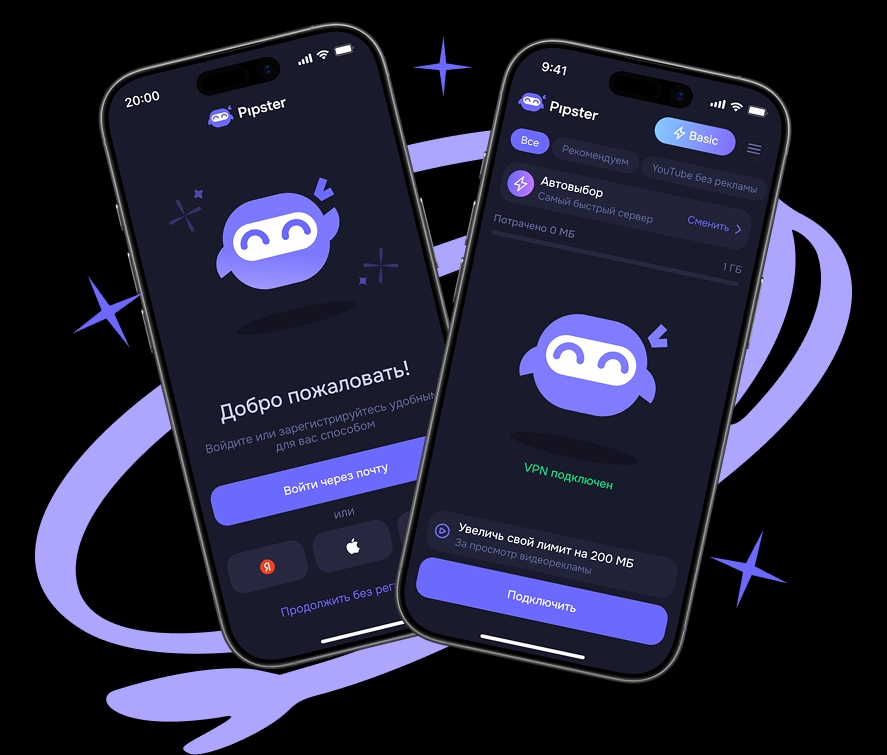
- Stable connection
- One-click activation
- Russian-speaking technical support
- Unlimited traffic
Make privacy
great again

Stay private online

Watch anything, anywhere

Use public Wi-Fi safely
Be safe
Access always
Connect without limits and stay online
Hides friends
We make sure no one knows what you do on the internet
Changes quickly
We update technologies, react to changes and new challenges
In 2026, internet censorship and traffic analysis have evolved, making standard VPN connections easier to detect. VPN obfuscation masks encrypted traffic as regular HTTPS data, helping users maintain privacy, speed, and uninterrupted streaming. Pipster VPN integrates advanced obfuscation to ensure your connection stays invisible to deep packet inspection without sacrificing performance.
What Is VPN Obfuscation?
Obfuscation is a technique that hides the fact you are using a VPN. Instead of showing recognizable VPN headers, the traffic looks like ordinary web browsing. This is critical for privacy when networks actively block or throttle VPN protocols. Pipster VPN uses modern stealth layers to strip away identifying metadata while preserving fast speeds for HD streaming.
Top VPN Obfuscation Techniques in 2026
Several methods have become standard for bypassing sophisticated firewalls and DPI systems. Each approach balances invisibility with connection performance.
- Stealth protocols wrap VPN packets inside TLS or HTTPS layers, making them indistinguishable from normal secure website traffic.
- XOR obfuscation scrambles packet headers with a simple bitwise operation to evade basic signature detection.
- TLS camouflage randomizes packet sizes and timing to mimic regular browser behavior, improving privacy on restrictive networks.
- Domain fronting routes requests through popular content delivery networks, hiding the true endpoint from network monitors.
- Multi-hop obfuscation chains traffic through multiple servers, adding encryption layers that confuse deep packet inspection tools.
Privacy, Speed, and Streaming Benefits
For privacy-focused users, obfuscation prevents ISPs and third parties from knowing you are connected to a VPN. Streamers benefit because platforms like Netflix, Hulu, and BBC iPlayer often block standard VPN IPs. By disguising the traffic, Pipster VPN reduces detection rates and helps maintain buffer-free 4K streaming. Advanced 2026 protocols also minimize the speed loss traditionally associated with extra encryption layers.
Does Pipster VPN Support Obfuscation?
Yes. Pipster VPN offers built-in obfuscation on all premium plans. The feature activates automatically when the app detects restrictive networks, or you can enable it manually in settings. Whether you prioritize absolute privacy, gaming latency, or streaming access, Pipster VPN optimizes the method in real time for the best balance of speed and security.
Conclusion
VPN obfuscation in 2026 is no longer a niche tool. It is essential for reliable privacy, consistent streaming, and fast connections on controlled networks. With Pipster VPN, you get cutting-edge obfuscation without complexity, keeping your digital life both open and secure.
Часто задаваемые вопросы
What is VPN obfuscation?
VPN obfuscation is a technique that disguises VPN traffic as regular HTTPS or web browsing data to hide the fact you are using a VPN from ISPs, firewalls, and deep packet inspection systems.
Does VPN obfuscation reduce internet speed?
Modern obfuscation adds minimal overhead. Pipster VPN optimizes these techniques to maintain high-speed connections suitable for 4K streaming and low-latency gaming.
Is obfuscation necessary for streaming?
Yes, it helps significantly. Many streaming platforms block standard VPN traffic. Obfuscation makes detection harder, allowing more reliable access to geo-restricted content.
Can obfuscation bypass deep packet inspection?
Yes. Advanced obfuscation methods are specifically designed to evade DPI used by restrictive networks, corporate firewalls, and censorship systems.
VPN Questions & Answers